Author: Dexter Nelson (Athalos)

  • Lets Talk About AI – Framework and Philosophy (Part 2)

    Lets Talk About AI – Framework and Philosophy (Part 2)

    In this second part of my ongoing discussion on AI, I shift the focus from technology itself to human civilization. I explore how survival has shaped every stage of our evolution, how major technological leaps have always forced adaptation, and why AI represents a pressure point unlike anything we have seen before.

    This video looks at AI through an anthropological and socio-economic lens, and why it may open the door to a fundamentally different way of organizing human life.

    Note: If you missed part 1, click here >>>.

    Transcript:

    00:00:01
    Hey guys, happy Monday. I hope everybody had a good weekend. Um, I did. Um, got to hang out with my mom a little bit. Um, got to check out her place. It’s really cool. Um, got some time in game time in with my friends. Um, hanging out online, so that was cool, too. Um, but of course, life happens. Uh, late last night, my server went down. um all my services went offline and I ended up working until the wee hours of the morning um trying to get everything back up and running. They are um it made for

    00:00:33
    a hectic Monday, but like I said, you know, such is life. I was able to catch up on everything. Um today I want to talk about part two of the talk on AI that we started last week. Um, part one, you know, I was talking about my framework and my philosophy and I mentioned that there were two things that I needed to cover. Um, part one was um talking about how AI doesn’t replace jobs, it replaces tasks and I’ll have some pointers for anybody who is in a job that is largely task oriented. Um,

    00:01:11
    because automation will eventually replace that anyway. That’s what automation does. AI or not. Um, I didn’t post the resources that I wanted to. Like I said, I kind of took the weekend off, hung out with my mom, hung out with family and friends. Um, but um, it will be up this week. I promise you that. Um, on dexternelson.com. That said, I want to talk today about what I kind of lined up last week, which is we are on the verge of this collective shift in the evolution of human civilization. Um, now it’s sort of

    00:01:46
    anthropological, so just bear with me. Um, and I’m actually looking at my notes here to make sure I stay on track. Um, the point I want to make is that humans, we’ve always operated, you know, survival first before culture, before economics, before ideology. Um, all of those things, survival came first. Um, and everything that we built in civilization kind of sprung out on top of that. um human intelligence involved. We develop pattern recognition. We uh tool use um social cooperation, coordination

    00:02:23
    and planning. Um all of those um they were adaptive advantages uh driven by by uh pressure of survival. Um and you know every major shift in human civilization has always followed survival driven change. Um we look at examples like fire, architecture, um agriculture, writing, industrialization. Um each new tool changed how we human beings organized ourselves. Um no the ships were never painless. Um they distributed labor for the large part. Um they reshaped social roles, we had new jobs, we had new titles, we had

    00:03:12
    new roles. Um and they basically forced adaptation is either we adapted or we you know or we go extinct. Um and the thing is that they were not optional. Um you know evolution does not res does not respond to comfort. Um it responds to pressure. And when societies fail to adapt new to new conditions, they go extinct. Um collapse of that society follows. That’s usually what happens. Um but today, our survival pressures are no longer primarily physical like back then. They are systemic, they are

    00:03:51
    abstract. Um for example, economic systems. Um we have some major economic issues that we need to deal with. um information systems, infrastructure, global interdependence. So you know even though the types of threats that we have faced as a human civilization have changed you know from the beginning till now um it has always been about survival. Um I know that’s hard to grasp so grasp. So, you know, you know, everybody usually asks, you know, some form of question. You know, what happens if I lose my job? Where are

    00:04:29
    we going to live? If I get sick, um what if my insurance doesn’t cover my claims? You know, what if the what if I’m in an in an accident? What if the economy crashes? You know, what if someone breaks into my home? Um you know, what if right now we have something going on in certain parts of our community. What happens if our birth rates continue to decline? Um there’s a real fear out there for some people that they’re being replaced that um they will no longer have the majority. You know they will

    00:04:58
    you know what happens in a natural disaster? We have the other side going you know what happens when climate change gets worse? How are we going to survive as humanity? So, you know, throughout our history, you know, everything we do, everything we built was always in some form or fashion a way for us to survive collectively as a society. Um, and as a human civilization, whether it’s the, you know, whether it’s the modern world or what used to be the third world. Um, hint that no longer

    00:05:31
    exists. um because the metrics we use show that all societies around the world are typically moving in the same direction. Um we’ve known that there hasn’t been a third world for like 50 years, but that’s neither here nor there. Um all of human civilization is built around um survival in one way or another. It’s our primary driving force. Um, it’s why people want to go to Mars and start a new civilization because if Earth gets bad, where what’s going to happen to humanity? You know, what

    00:06:07
    happens if there’s a disaster and Earth becomes unlivable? You know, we have people worrying about things like that. Um, it’s all stemmed from survival. But, you know, even throughout our history, um, every once in a while, a technology comes along that pushes human civilization forward. not through the gradual progression that we’ve seen but in mega giant leaps for example the fire the wheel agriculture um these were not incremental improvements they fundamentally changed how we lived organized and survived now

    00:06:42
    the reason I mentioned that is because today AI is very much like the firewheel in agriculture in that it represents a massive leap forward for human civilization um it is applying a new type of pressure. Um, many of which you were already concerned about. If you recall, the first video was about what happens if AI replaces my job. Um, and we talked about it was not actually AI itself, but organization. But here’s the thing, it also creates a new opportunity because of the nature of it. For the first time in human history,

    00:07:19
    we have the potential to move beyond operating purely on survival. Excuse me, sorry about that. And we have the opportunity to move away from survival and begin operating from a position of collective good for our entire species. Um but that only comes if AI is used properly as if it’s treated as an opportunity and you know not just some other automation tool or you know powerful search and retrieval thing for uh profit which seems to be how everybody’s going with it. Um, you know, it it opens the door for

    00:08:08
    something entirely new. Um, we have the opportunity to create a type of economy that literally has never existed before. It’s one where basic needs are met. all of us, you know, housing, food, shelter, all of it, where our basic needs are met. And where success and the levels of success beyond that basic level are based on participation and contribution into our society, you know, where informed decision making is supported by AI systems that help reduce the negative biases that we all carry in one way or

    00:08:47
    another. Um because when you’re driven by survival, success largely depends upon the the the expense of others. It’s not a flowing technology. It’s just our nature. Um you know, because when we succeed, it’s usually because someone else fails. So it is in our nature. And I wouldn’t start by trying to change how humans think, but I can start by changing how we are informed. that I think to me is a worthy goal. So, and with that in mind, I chose to build a framework with a fundamentally different approach and

    00:09:25
    it’s an ontology first approach um which I think will be an interesting venture in or interesting conversation or a little interesting venture to dive down. Um, but that is for part three when I talk about the actual framework and how I built it and why I say it’s ontology first as opposed to systematically first like everybody else is doing. So, see you guys in the next video.

  • Lets Talk About AI – Framework and Philosophy (Part 1)

    Lets Talk About AI – Framework and Philosophy (Part 1)

    AI is surrounded by a lot of hype, noise, and even fear. In this video, I take a step back and talk about AI in a grounded, practical way, discussing what AI is, how it is being used today, where it is heading, and what you can do right now to stay ahead of the curve.

    This is the first part of a three-part series where I begin explaining the AI framework I created, the philosophy behind it, and what it could mean for the future.

    Transcript

    00:00:01
    Happy Friday, everybody. Um, I hope you all had a good day. I hope youall had a productive day. I know I did. Um, I got some rest. My skin looks a whole lot better than it did yesterday. So, that’s a win. Um, but I also got up and I went to work and, you know, I got a lot done. Nothing new or amazing. It was just a regular day of getting my responsibilities taken care of for my clients and for myself. So, it was a good day. It was not a wasted day. And I’m happy about that. I feel good right

    00:00:30
    now. Um, today I want to talk about AI. Um, and this is going to be a three-parter. There’s just so much to talk about. Um, I want to talk about AI and the philosophy behind building my AI framework. As I mentioned that, um, I spent the last year developing and launching an AI platform uh, from scratch. Um, and it actually goes into production into beta format on January 15th. Um, as a commercial beta, but you know, over the last year, a little over a year, I feel some pretty tough questions about um AI. Um, some were

    00:01:09
    people were genuinely interested, others were, you know, fearful of what it might become. Um, but before I go into that, I want to point out two obvious things. Number one, this little desktop fan is going that is keeping me cool right now. Mostly because my metabolism is racing right now um on my health journey. You know, my metabolism is very high and certain parts of the day I sweat a lot. Which leads to the second observation. My hair is down. Um, that’s because when my metabolis metabolism races, I get very hot and I

    00:01:52
    just start sweating. Um, so my scalp sweats too. So I usually let my hair down and let the fan keep my scalp cool. Um, yeah. So remember your scalp is skin. Take care of your scalp. Um, so that said, um, back to AI. Um, I want to talk about it in a responsible way. I want to inform um I want to avoid a lot of the marketing hype or maybe resolve a lot of that. But, you know, I also want to be sensitive to certain um economic realities that are happening right now. But before I can explain my philosophy

    00:02:32
    behind AI and building it, I want to talk about two things. And they might sound like hot takes, um, but I don’t want to freak anybody out. Um, so number one, I’m just going to say it. AI does not replace jobs. It replaces tasks. And I’ll come right back to that. And second, you, me, we, us, we all need to realize that we are on the verge of collective shift in the evolution of human civilization. Um, and it’s going to require a new type of economy that has never existed before. Um, not even a

    00:03:07
    little bit. You might have seen it. Um, but they might sound like hot takes, but I want to address them and kind of bring it back around. So, let me pull that first thing out of the air. AI does not replace jobs. It replaces tasks. Now, we are in an economic reality where a lot of the talk is that, you know, jobs are being replaced by AI. No, they’re not. No, they’re not. What we’re seeing is jobs are being replaced by employers who are automating tasks. All right, that’s a very important distinction to

    00:03:44
    make. Now, jobs are being replaced by employees who are automating tasks. Automation always removes tasks, not entire occupations. All right? So, calculators did not eliminate mathematicians, right? Word process, word processors did not replace writers. Uh, spreadsheets did not replace accountants. I can go on and on and on about this. What usually happens is that repetitive low value tasks, they usually get absorbed by automation. But here’s the thing, that is progress. But automation doesn’t remove

    00:04:29
    doesn’t remove the entire occupation itself. Progress may eliminate roles but usually what happens is that humans move up the tier of progress into new roles that are created by it. So for example um let’s 60 years ago we had huge assembly lines with hundreds and hundreds of hundreds of people. progress the automation. It eliminated those tasks, but we still needed people there. We still instead of hundreds of people on an assembly line, they’re now a few key dozen people or so that they manage, they oversee, they

    00:05:10
    repair, they maintain, they plan all of it. So, you know, those repetitive tasks gets folded up, but it always creates more opportunity. And a lot of companies right now are learning the hard way that you can’t completely replace human beings. Um, automation is a leverage, not a replacement. And just like those assembly lines, humans move up the ladder of progress, not down it. Um, we move from execution to oversight. We move from labor to architecture. We go from doing things to deciding things.

    00:05:50
    And as I said, as companies, as I said, companies are finding out the hard way. You can’t replace humans entirely. Not with automation. You still need things that are uniquely human. You still need judgment. You still need review. Um, you still need intent decision- making. You still need expertise. All of those things and more are uniquely human and will always be needed. Um, and while there are some initial job losses to automation, they’re more like growing pains and not injuries because the arc of progress usually

    00:06:26
    creates more opportunities than that are lost. It’s a net gain economically. And the problem is that we as humans, we tend to get stuck in our current state and we don’t want to move up that tier. Well, that’s something that we need to change mentally. Um because right now as as of last year 2025 there are more than three million jobs available in STEM fields and growing. STEM if you’re unaware means science, technology, engineering and mathematics. Um and as we move towards AI, those repetitive

    00:06:59
    tasks are going to get absorbed but the demand for the expertise um is only going to grow. Um, so that’s it. I want you to think of AI as another automation tool. Um, because right now that’s where the focus is and in the foreseeable future that’s how it’s being used um more as automation. So don’t freak out. I want you to make that mental shift and start using this using this as an opportunity to get ahead of the shift that’s coming because it is coming. Progress always

    00:07:31
    happens. Um, as long as the drivers of our economics are always advancing, regardless of government, regardless of who’s in power, regardless of whatever laws are in place, advancement happens, right? It just happens at a different pace. You can slow it down, but you can never stop it. Um, so don’t freak out. Um, right now it’s just another automation tool. Um, you know, musicians didn’t go away because music per music creation became digital. you know, it’s it’s just one of the things we’ve always

    00:08:03
    had to deal with. That said, if anyone wants to um wants to take that seriously, um I will begin posting um places where you can actually get the education that’s necessary that’s necessary for you to make that advancement, to make that leap for free or cheap. A lot of places are offering it that way just because there is such a need, there’s such a demand for it. That’s only going to grow. So, I’ll start posting those on my site at dexternelson.com. Um, nothing’s there right now, but um

    00:08:39
    there will be. And wow, we’re almost at 9 minutes and excuse me while I wipe my nose. Um, I what I’m going to do is I’m going to It’s already nine minutes. I’m going to pause the video here or stop the video here and break this up into three parts. Um, today was talking about AI replacing jobs. The next point is going to be the anthropological um going to talk about the collective shift and the evolution of human civilization. That’s going to be deep. That’s going to be a fun topic. And then

    00:09:15
    in the third video, I will uh bring points one and two together today about AI replacing task not jobs. the anthropology of evolution of our civilization and you know I’ll bring those together to actually talk about the philosophy which is what I call oncology first AI that’s going to be a fun talk but yeah if you guys are interested go ahead and subscribe um either here or on my blog at dexternelson.com I’ll post those resources I’ll try to get it done in the next day or two um

    00:09:50
    but um Yeah. So, I guess I’ll see you guys in our next video.

  • Hello World! Out of the Shadows – Into The Light (Happy New Year 2026)

    Hello World! Out of the Shadows – Into The Light (Happy New Year 2026)

    Happy New Year everyone! Welcome to 2026! So, I don’t post video often. I’ve been content to write, but this year I decided to change that.

    So, this my 1st video of 2026, a simple “hello world” – an introduction, a reset, and a line in the sand.

    I’ve spent years building, creating, learning, and working behind the scenes across technology, health, music, and independent projects. This is me stepping out of the shadows, sharing more openly, and letting the full range of what I do speak for itself.

    PS: If you prefer to read, I’ve posted the transcript below the video and will do so for every video moving forward (with timestamps).

    Transcript:

    00:00:01
    Hey, happy new year’s everybody. Um, I’m wishing everybody a happy 2026, a blessed 2026, a productive 2026. Um, I know a lot of people don’t usually see me comment or usually see me post. Sorry. Um, but I comment a lot. I engage with a lot of people from the perspective side. Um, I’m usually content to be entertained, um, to avoid drama and watch what everybody else is doing. Um, it helps me pass the time. It keeps my brain occupied. But this year, you know, when everybody’s making their New Year’s

    00:00:39
    resolutions, I made one of my own, and that’s to start posting. That’s to put myself out there. And news flash, yes, I look a little bit rough. It’s been a rough couple months. have been overworked um on just a bunch of different things. Also, yes, I’mma call it out. My teeth are messed up. I’m getting them worked on. I’m getting them fixed. So, this is a temporary situation. Um but yeah, New Year’s resolutions 2026. I decided that I wanted to break out of my shell this year. Uh say hello world.

    00:01:14
    Um and share about the many, many, things that I have going on for example. This year will make 14 years I’ve been working full-time from home. Um I’m an entrepreneur, a programmer, an engineer, musician, classical composer. Um I run a tech marketing company, a music company. Um, I’ve written three books work working actually working drafting out my fourth. Um, I have lots of independence projects independent projects happening. Um, I’m a World of Warcraft player. I’ve been playing it ever since like shortly after

    00:01:52
    vanilla came out thanks to my big sister. Um, I’m actually restarting my guild. Um, I’ve been on this amazing health journey for the last couple years. And I think part of the reason, um, I was never consistent with posting is I don’t know, I have so much going on. Um, including the launch of my AI project, which is happening this year. I I spent a little over a year building an AI platform from scratch, and it’s just unlike anything else that anybody else is doing out there. Um, and that’s from

    00:02:28
    the perspective of other people doing it. Um, I have a very different philosophy. Um, but yeah, like I have [clears throat] so much to share and talk about like where do I start? You know, conventional advice says you pick one thing and you build on it. Um, it’s sort of like a theme, you know, just one thing not to confuse people. And, you know, I could never square with that and everything that I have going on. So screw it, I guess. Um, I’ll pick one thing to talk about. Me. And I don’t

    00:03:02
    mean that in a conceited way. It’s just I’m a person with a lot of interests and I pursue what interests me. So I have a lot of crap going on up here. Um, so why not talk about them all? Um, screw conventional wisdom. I mean, it’s 2026, right? Um, so you all see me a lot more from me. So hello world, I guess. Let’s have some fun.

  • The Untold Science of Weight Loss

    The Untold Science of Weight Loss

    Dexter Nelson - Wedding (The Untold Science of Weight Loss)

    See the guy on the left with the gut that’s blowing out a 48L suit? Yeah. That’s me, a few years ago at my sister’s wedding. That was the day that I became entirely disgusted with myself for letting my body get so badly out of shape.

    At over 350 pounds, I was morbidly obese, and had stacking health problems, including chronic pain, sleep apnea, and persistent edema in my legs. My sleep was very poor and I’d wake up with raging headaches, drenched in cold sweats.

    And I was so out of shape, that walking to the end of my driveway to get the mail and back left me out of breath.

    That was the day, looking at myself, I knew with certainty, that if I didn’t do something to change my health and my life, that I would end up in an early grave. That same day my health journey began.


    My Journey To The Science of Weight Loss

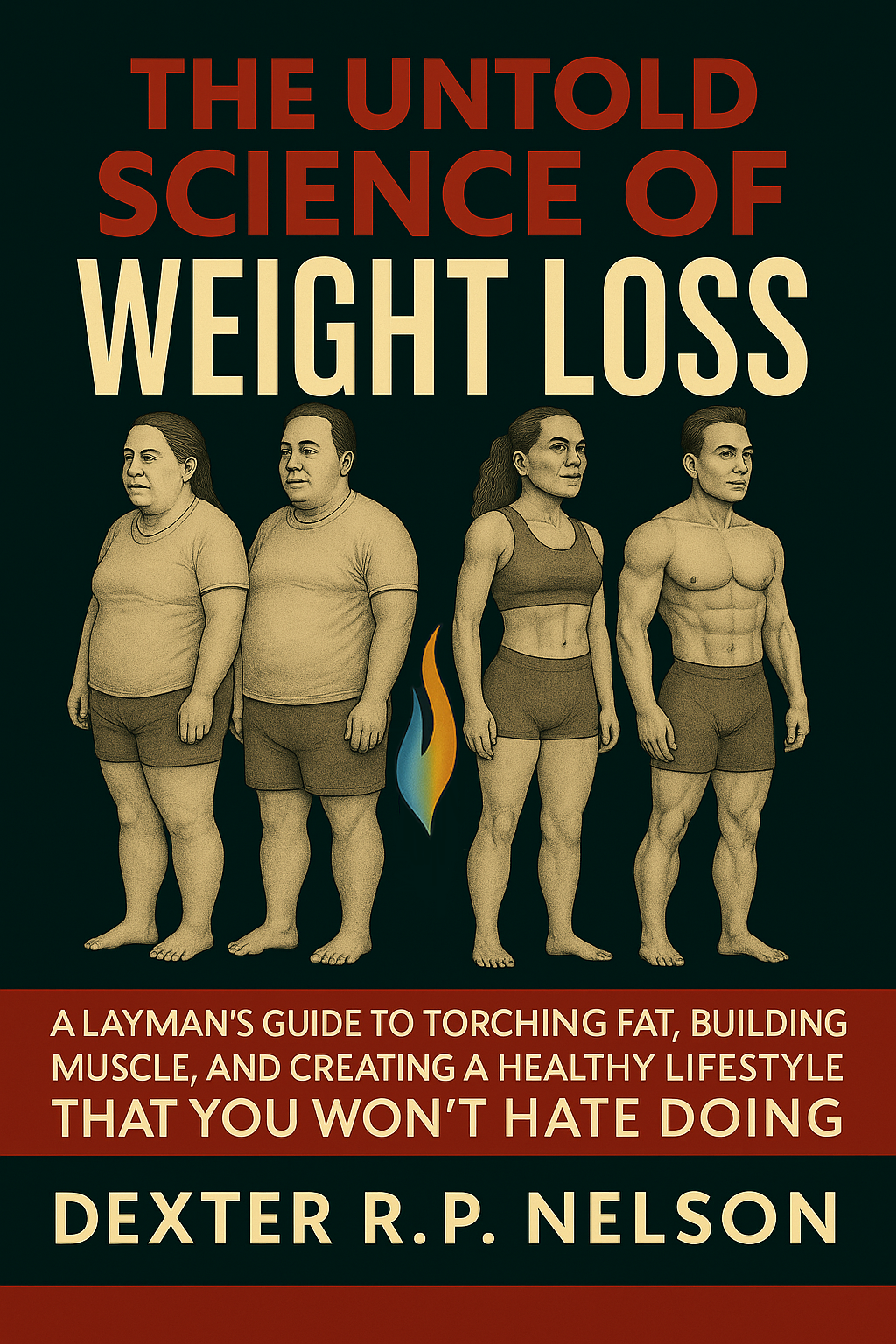
    My new book, The Untold Science of Weight Loss is all about my health journey. It’s about my failures and successes, and ultimately how I was able to not only lose weight but also fix my health with just a few simple lifestyle changes. And just as important as the lessons learned, is the strategy I created called The Double-G Deplete Strategy, based on the science of biology.

    I decided to become a student of biology, especially metabolism, because, like most people, I had experienced many failures and setbacks, including rebounding weight which was a problem. For me, it seemed like if I let up on my routine for more than a day or two, the weight I lost would come right back, and it would be even harder to lose it again.

    Not only that, but when I did finally lose the weight and reach my target goal, none of my problems really went away, and I learned the hard way that just because you lose weight, it doesn’t mean that you’re necessarily healthier, and I wanted to get better!

    So, I became a student of biology. I started reading books, (including old college textbooks), taking courses online, hopping on webinars, and talking to coaches and trainers. I really wanted to understand how the human body worked, especially metabolism.

    See, my health journey up to that point felt like an uphill battle. I was fighting my body, and my body was winning, but I knew that if I could figure out how my body worked, then I could also figure out how to burn the fat, lose weight, and heal myself.

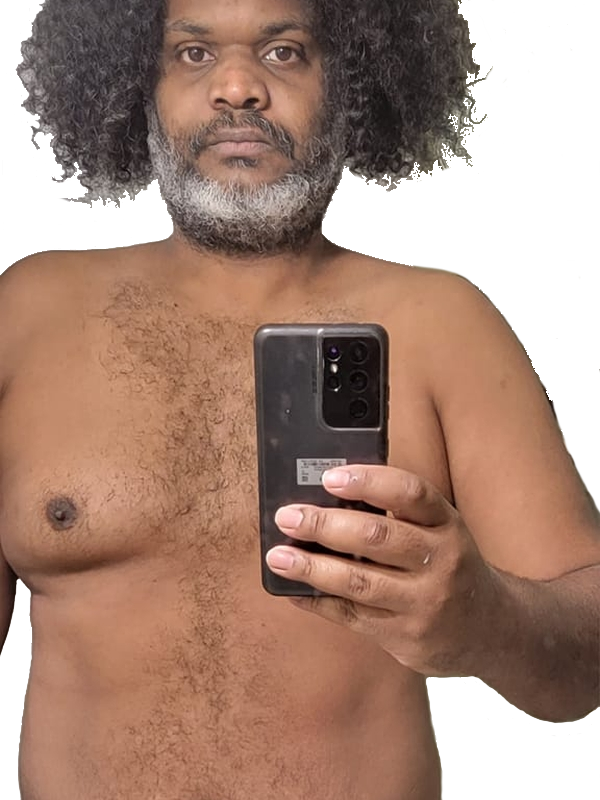
    Now. See the guy on the right? Yeah. That’s me just a few weeks ago in front of my bathroom mirror, feeling pretty proud of myself, especially with my abs starting to pop.

    At this point of my journey, I’m around 318 pounds, which doesn’t sound like a lot of weight loss from over 350 pound… but here’s the thing. Even though I was 318 pounds, I had lost over 72 pounds of fat! How is that possible?

    Simple. I also gained 40 pounds of muscle! I had dropped down to 278 pounds through pure fat burn, and thanks to resistance and body weight training, I gained 40 pounds of muscle. I was more fit at 318 pounds than when I was at 278!

    Dexter Nelson - Abs (The Untold Science of Weight Loss)

    But more than being fit, I was also much healthier as I’ve seen my health problems reverse – no more edema, no more waking up with headaches and cold sweats, no more sleep apnea, and recently, no more chronic pain. Even the tinnitus in my ears are gone.

    As for my endurance? I can consistently run 5k (3.2 miles) without even getting winded, and I’ve gone as far as 10 miles as I work towards being able to do my first half-marathon, which is 21.1k (13.1 miles).

    And today, as a 47-year-old, I’m faster, stronger, have more endurance, and I’m more conditioned than I have been since I was in my 20s, and probably more so. I even look younger – and I accomplished this without working out for hours on end, without any strict or weird diets, without any memberships, or expensive medications. I workout no more than an hour a day, from home, and still eat all of my favorite foods.

    How did I do it?

    The Double-G Deplete Strategy

    To be clear, none of this is by accident. I didn’t stumble unto some miracle cure, or magic pill, or some long lost secret held by gurus and ancient mystics. All I did was follow the science.

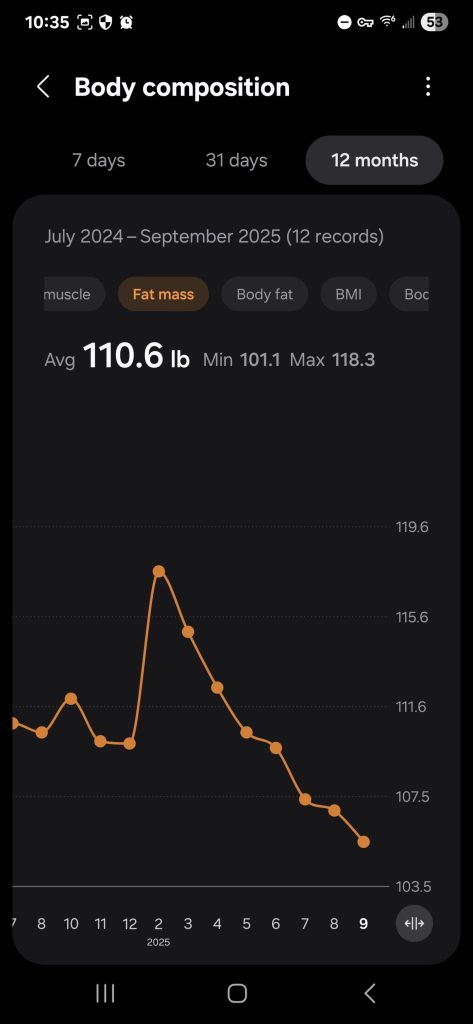
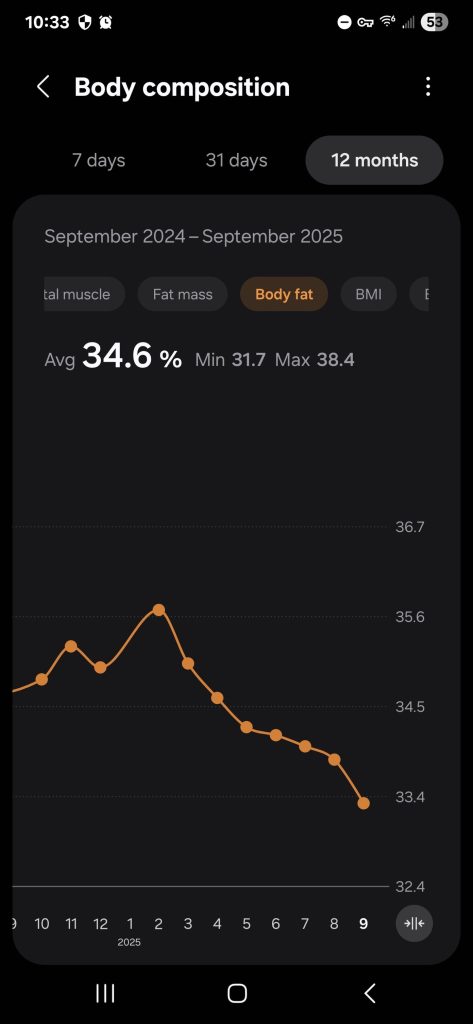
    Remember earlier when I said, “… if I could figure out how my body worked, then I could also figure out how to burn the fat, lose weight, and heal myself“? That’s exactly what I did! And if I were to show you a chart of my fat loss, you’ll see nothing but a plummeting line of consistent fat loss.

    In fact, here you go! What you’re about to see are two recent screenshots of my body composition logs spanning 12 months. Specifically my fat mass and body fat.

    Dexter Nelson - Fat Mass - Body Composition Dexter Nelson - Body Fat - Body Composition

    And the beautiful thing is that it’s permanent fat loss. I’ve gone as much as a week with minimal working out and my body was still burning fat. It’s like my body is in a permanent state of ketosis, except without the carb tricks.

    What the Double-G Deplete Strategy does is condition your body to burn fat as your preferred fuel, and with a few simple tweaks to your lifestyle, and one tweak to how you exercise, you can start applying the science and seeing results too.

    But before you can learn the strategy, you must first learn the science… and that’s why I wrote the book, The Untold Science of Weight Loss.

    Currently, my book is on sale in digital download (PDF) for just $7 USD.

    And when you purchase the download, you will get immediate access to two very special guides that I wrote.

    1. The Quality Sleep Guide, which teaches the strategy of how I retrained my body to sleep, (and how I cured my sleep apnea).
    2. The UVB Light Guide, which is guidance on how to leverage sunlight to help accelerate your fat burning.

    The printed version and the audio book are coming soon, as are additional tools and resources to help you on your own health journey.

    Click here to learn more and get instant access to your bonuses click or tap the link:
    The Untold Science of Weight Loss >>

  • 30 Days of Faith: Are We All Going To Hell? (Day 6)

    30 Days of Faith: Are We All Going To Hell? (Day 6)

    So, I was listening to Cliffe Knecthle, a pastor and apologist speak on the question, “are we all going to Hell?” I have to admit, I wasn’t happy with his answer, which you can see here.

    Don’t get me wrong, what he said was correct, however, I feel that it was also incomplete because while it answered the question, it didn’t give the full answer that a person seeking Christ would need to understand, (or even an existing believer who simply doesn’t know).

    So this post today is to answer the question, are we all going to Hell, in a biblical way, and I hope it makes sense.

    Warning: This is a topic that stirs a lot of emotions, so please read all the way through before rebutting. I promise you it will make sense by the time you finish,

    So, the first thing you need to understand is that nobody goes to hell because of sin – we are all, **already** on our way to hell — I know. That’s a very bold statement.

    Does you know John 3:16? – “for God so love the world that He gave His Only Begotten Son that whosoever believes in Him should not perish but have everlasting life?

    Most people do. It’s probably the most common verse that kids memorize, but have you read versed 16 and 17?

    They say, “For God sent not His Son into the world to condemn the world, but that the world through Him might be saved. He that believes is not condemned, but he that does not believe is *condemned already** because he didn’t believe in the name of the only Begotten Son of God.

    You get that? We are condemned – already.

    See, the path of condemnation was set long ago before any of us were born because sin entered the world and it infected every human being that was ever born and that will ever be born.

    Put another way, we are not born into the land of the living on our way to the dying. We are born into the land of the dying on our way to the land of the living – eternity.

    And the proof that we are in the land of the dying is that we will die. Nobody gets out of this life alive. We do not have forever in this life.

    We will in the next, but not this one, and because of circumstances beyond any of us, all roads lead to Hell unless we choose to believe in the name of Jesus Christ.

    Because sin entered the world, it corrupted our natural state, so we aren’t born good – we are born innocent.

    But because we have a sin nature – that is, the inclination and proclivity to sin, our state of being is unacceptable for admittance into heaven.

    Put another way, not all of us are as bad as we can be, but by default, all of us have been bad enough that we cannot be perfected in the eyes of God without help.

    So, how do we become perfect? Where does the help come from that we need in order to be seen as righteous before God?

    Enter, Jesus Christ.

    The work that Jesus did on the earth did something amazing- it paid the eternal sin debt that was that was hanging over our heads.

    Now, I won’t quote all of it, but if you read Romans 5: verses 12-19, it begins, “Wherefore, as by one man sin entered into the world, and death by sin; and so death passed upon all men, for that all have sinned“.

    That was speaking of Adam and the sin in the garden. Notice that it says sin caused death, and death was passed to all man (mankind). So sin was inherited, like a genetic disease.

    But when you continue to read, verse 19 says, “For as by one man’s disobedience (speaking of Adam) many were made sinners, so by the obedience of one shall many be made righteous.

    That’s speaking of Jesus Christ.

    His life, death, burial, resurrection and ascension, did something amazing – it paid the debt owed by mankind to God, and then it reconciled us to God.

    2 Corinthians 5:18-19, says “All this is from God, who reconciled us to Himself through Christ and gave us the ministry of reconciliation.

    What Jesus did was free us from sin and death, so we can be reconciled to God. Sin drove a wedge between us and God.

    And if you want to know why hell is eternal? It’s because God is eternal, and sin is an eternal crime against an eternal God, so the judgement must also be eternal.

    The good news is Jesus Christ.

    Romans 8:1-4 “Therefore, there is now no condemnation for those who are in Christ Jesus. For in Christ Jesus the law of the Spirit of life set you free from the law of sin and death. For what the law was powerless to do in that it was weakened by the flesh, God did by sending His own Son in the likeness of sinful man, as an offering for sin. He thus condemned sin in the flesh, so that the righteous standard of the law might be fulfilled in us, who do not walk according to the flesh but according to the Spirit.

    And the moment we accept Christ, we receive the Holy Spirit in us. For reference, Corinthians 12:13, Romans 8:9, and Ephesian 1:13-14.

    And after we have received Christ, Jesus begins working in us, by the power of the Holy Spirit so that we become more Christ-like.

    In fact, He gives us a new identity – the bible calls believers saints, not sinners. Beloved and not enemies. Sons and daughters, not strangers.

    So, to answer the question, does everyone go to hell if they aren’t saved? Yes. But it’s not because we’re bad or wicked or evil.

    It’s because we’re already on our way to hell unless we accept Christ as our Lord and savior — which He offers as a free gift, by the way.

    On more thing…

    If you’re yet a believer in Christ and would like to know more, there’s a great resource you should check out where you can get to know all about Jesus, His work, and salvation.

    Click here >>

  • 30 Days of Faith: Don’t Worry. Be… Joyous? (Day 5)

    30 Days of Faith: Don’t Worry. Be… Joyous? (Day 5)

    I draft out my posts, when possible, days ahead of time, and I drafted out two – this one on worry and joy, and another on heavenly places last week., and another on know, I know! That’s not how the song goes. But here’s the thing – joy is far better than happy.

    I know that’s easy to say, so I’ll show you. This is this post that I’m writing now, (notice the last modified date).

    And this is the second one I mentioned. Similarly, look at the last modified date.

    The last week has been very eventful. A lot has happened, good and bad, and I’m glad that I didn’t post these back then when I wanted to because God has an interesting sense of timing, and the context of what I would have written changed, because we’re all coming from a different perspective.

    I was actually feeling guilty that I didn’t post, because for me this is day #14 of my 30 Days of Faith, and everyone else who was looking forward to the series is only now getting Day #5, but I believe now there was purpose in it.

    Let’s talk about worry…

    For a lot of people, they would be joyous if there wasn’t so much to worry about. Life has a way of creeping in and filling our spaces with sicknesses, financial obligations, adversarial people, tragedy, and all kinds of situations and circumstances that not only distract us, but demand and command our attention, and robs us of our focus.

    And as soon as we think we’ve got a handle on things, there is sure to be something else, and there is always something else.

    So, how do you stop worrying?

    There was a very timely sermon from Tony Evans today that I want to share, but before I do I want to share two very important principles that will help you to not worry, but also empower you in a way that affects your whole life.

    Principle 1: Worry Is A Sin.

    I know that’s a strong statement to make but it really is. Over and over again in the bible we are warned to not worry because God will provide and keep His promises.

    Matthew 6:25 tells us not to worry about your life, what you will eat or drink; or about your body. And then in verse 34 of that same chapter it says do not worry about tomorrow.

    In Luke 12:24-28, we’re told to consider the ravens and the flowers, how they never have to toil and God provides.

    Throughout the bible, the solution for worry is to trust God, and worrying shows that we don’t trust God to keep His promises, but more than that, it means that we were looking to someone or something else for our provision.

    And when you look to anything else for provision, that is idolatry. So for me, worry is rooted in sin, and I repent of it.

    Now, that leads to the second principle.

    Principle 2: Who Is Your Source?

    If you really understand this principle, it will change the direction of your future. Now that you know worry is a sin the next question is, how do you stop from worrying? Because as we said, life keeps coming and there’s always something else.

    Here it is – Don’t just trust God to provide; Make God your only source.

    Put God in a position to where He’s the first person you ask, and give Him the final say in everything you do. Make Him the highest and ultimate authority.

    When you make God your only source for everything; when you structure your life so that God is over everything like finances, health, relationships, and everything else – everything and everyone else becomes a resource that God uses to fulfill His promises and provides.

    Suddenly, your boss at work can’t hold your paycheck over your head because your job and your boss isn’t the source of your income. God is. He’s just using the job and your boss to provide.

    When you’re sick, a diagnosis can’t be held over your head because the doctors and the hospital aren’t your source of health. God is. He’s just using the hospital and the doctors to provide.

    Understand that when you put Jesus Christ as the first and last authority in your life, if the Father says yes, then the world can’t say no, because they do not have the final say. God does, and if you’re living in such a way that you’re in alignment with Christ, the Lord will provide.

    Now, don’t get me wrong. There are concerns that we will have, but those concerns will never escalate and become worries because you have a heavenly Father that always keeps His word. So believe Him, and live out that belief.

    That is what we call faith – believing God. Or, as once was said by Tony Evans, “faith is acting as if it is so, even if it’s not so, in order that it might be so, simply because God said so“.

    Stop worrying.

    An Exercise To Help With Worry.

    Now, it’s one thing to say worry is a sin, and it’s one thing to make God your source, but how do you actually deal with worry?

    One thing about me people notice is that I don’t worry about anything, ever… at all, and the thing that helped me to stop were the two principles I just shared, and a simple exercise that I created for myself.

    Basically, what I do is:

    • I pray to make sure I’m confessed and repented so that my sin doesn’t interfere with the relationship between me and Jesus. Sin gets in the way of that relationship so I want to make sure there is no personal sin that I haven’t dealt with.
    • I take out a piece of paper and I make a list of all of my problems; the troubles I’m facing, the challenges I have, and everything that is a concern., and then I make a list of my problems.
    • Once I’ve made my initial list, I take each item on the list and I write down things I think I can do to solve it. I really think here and put some effort into it.
    • Then, when I’m done with that, I pray over the list, asking God what He wants me to.
    • Then I make a list for each item about what I can do. Then I pray over the list and ask God to show me what He wants me to do.

    Sometimes the answer is on the list, sometimes it’s not, but whatever God says to do, I do, and if there is nothing I can do about it, I turn it over to Him, and I put it out of my mind. I trust God to take care of it.

    That way, I’m never thinking about problems. I always have something to do and I’m always trusting God above all.

    Now, the reason for me making a list and writing everything down is because one of my worry triggers was having too much in my head to think about. It was exhausting and many times left me more confused and frustrated than the problem itself.

    Making the list was my way of getting the noise out of my head so I could focus and think clearly, and at the end of the exercise it brought me peace because there were no “what if” or “what about”-type thoughts remaining. So, spend some time brainstorming on that solutions step where you think about everything you can do.

    The more time you spend there, the less of those kinds of thoughts you have.

    Sermon Time

    As I said, Tony Evans has a timely sermon this morning, and I was quite happy with it because it was on this topic, and honestly, that’s one of the reasons I knew that today was the right day to resume writing.

  • The Death of Racism: A Call To Bury Systema Naturae

    The Death of Racism: A Call To Bury Systema Naturae

    If you still think “race” when you think of a person’s skin color, your way thinking is almost 300 years out of date. In 1735, (290 years ago), Carl Linnaeus, a Swedish Biologist, divided humanity into four races largely by complexion.

    • Europeans = white
    • Africans = black
    • Asians = yellow
    • Native Americans = red

    Here’s the problem: his classifications have been proven wrong time and time again, and society has never gotten rid of them.

    There is only one race: The human race, and within it we carry extraordinary diversity.

    We are not different races. We are of different complexions.

    Complexion is defined as “the natural colour, texture, and appearance of a person’s skin, especially of the face“.

    So my mission, starting now, is to end racism – and the best way I know how is to finally do what should have been done 290 years ago: bury Carl Linnaeus’s classifications for humans based on complexion once and for all.

    And we’ll start with calling him out for what he was – the father of racial science.

    In 1735, when he published Systema Naturae, he didn’t just classify human beings. He attached temperaments and value judgments, and as a European intellectual in a colonial era, while he was obsessed with classifying things, he also reflected the stereotypes and hierarchies of the era of colonialism and transatlantic slavery, where Europeans at the top, others ranked lower.

    These are his classifications:

    • Homo Europaeus (white, governed by laws)
    • Homo Afer (black, governed by caprice)
    • Homo Asiaticus (yellow, governed by opinion)
    • Homo Americanus (red, governed by custom)

    What his Systema Naturae did was provide a scientific veneer, a covering, for ideas that were already being used in colonialism and slavery, and it gave a “natural order” justification to the inequalities Europeans had been enforcing since the 1600s.

    Linnaeus’ system may not have caused slavery, but it institutionalized race-thinking and gave it a framework that politicians, economists, and slaveholders could lean on.

    By the late 1700s and 1800s, his taxonomy fed directly into so-called “scientific racism,” which rationalized slavery, colonial exploitation, and segregation as being natural.

    It was this kind of thinking Darwin would use 124 years later in his work, Origin of the Species, (full title: On the Origin of Species by Means of Natural Selection, or the Preservation of Favoured Races in the Struggle for Life).

    It was this kind of thinking that Hitler would then use, starting in 1933 during the Holocaust and the Nazi Medical Trials to exterminate Jewish people.

    It’s this kind of thinking that Margaret Sanger would use, publishing and promoting Nazi propaganda about race and eugenics, as the basis to open abortion clinics in and around non-white communities of color.

    And it’s this kind of thinking that has infiltrated almost every level of society from politics and economics, to social systems and even medicine.

    Many in our medical industry still believe that:

    • Black patients feel less pain, or have thicker skin/nerve endings.
    • Black patients naturally have higher muscle mass and therefore higher kidney function.
    • Black and Asian patients have inherently lower lung capacity than whites.
    • Rashes, bruising, jaundice, cyanosis (oxygen loss) show up the same way on all skin tones.
    • Black patients are biologically predisposed to hypertension.
    • Black women’s bodies are “naturally” higher risk in childbirth.

    For the record: ALL OF THOSE ARE FALSE!

    Carl Linnaeus’ Systema Naturae has been at the heart of scientific racism for almost 300 years, and it has been at the heart of justifying racism based on complexion in all of it’s forms, and it has been used to justify murders, genocides, and countless atrocities and injustices throughout history.

    And it remains pervasive and problematic almost 300 years later, even though it’s been proven wrong over and over again, because those who peddle hate, and those who benefit from the division are able to justify it with faux science.

    It’s time for Systema Naturae to die… and I’m recruiting you to help me.

    How We Should Classify Fellow Human Beings (Update)

    When I first started sharing my idea about ending Systema Naturae, there were some specific questions that I had to address, because, if we weren’t saying “race” anymore, what is the right way to answer? So, here are some questions and answers I felt were necessary to share, and how I answered them.

    Question: But didn’t black people in the US create a new race? They gained culture and community over shared experiences during slavery, Jim Crow, etc. That collectivism is the foundation of the race, something White people in the US lack.
    Answer: A black culture, a black heritage, not a black race.

    Question: Do you consider American people who are descendants of slaves racially African then?
    Answer: No. I consider them ethnically African. Race is a false classification when applied to complexion (skin color).

    Question: How then would you classify what we consider as mixed race?
    Answer: I consider them ethnically mixed.

    Question: Doesn’t Rh negative blood prove that different humans are different species?
    Answer: Rh negative blood indicates geographic and ethnic distribution patterns, not separate races. While blood types vary by ancestry, genetic evidence proves that humans are one species, with clinal variation, not discrete racial categories.

    Question: So, there’s no such thing as an “interracial marriage” or “interracial relationship”?
    Answer: Nope. We have intraracial marriages and relationships, meaning two people of the same race (human) but with different complexions (color).

    Question: What would you say to people who say things like “we are one species, and within that species there are different races?”
    Answer: I would say that we are one species, and within that species this is one race with different ethnicities.

    Your Mission (Should You Choose To Accept It)

    If you’d like to help me on my journey to end Systema Naturae, (removing the scientific justification for color-based racism), there’s how.

    1. Share this post on social media. The goal here is to ultimately inform the masses that race and complexion are not interchangeable, and that there is only one race – the human race.

    Whether you share this post, made a video, or even create your own blog post, (you have my permission to copy my work on this post), doesn’t matter to me, as long as the word spreads and the message becomes common knowledge.

    2. Challenge color-based racism when you see it. I’m not talking about starting debates or fights online, or trolling and bullying others. The goal is to combat hate, not perpetuate it, (you can’t fight hate with hate).

    So, whenever you see someone sharing or espousing ideas that perpetuate or promote racism based on complexion, especially in your own circles, challenge it. Let them know that at the correct word is complexion and we are not different races. Point back to this post if they need evidence of that, (there is a growing list of proof at the end of this article).

    This second one is important, because some messages are better received by people when it’s coming from their peers and people they know, like, and trust. I could scream, “there’s only one race: the human race,” until I’m blue in the face, but some people will only receive it when it’s from someone they know.

    That’s just human nature.

    3. Pitch In. I am just one person on a mission, and there’s only so much I can do. If you’d like to do more, then you are welcome to join me. I would love to hear your ideas. If you have a platform, I would love to collaborate with you. I’m open to different ideas, and I’m willing to work with anyone who’s genuine about stopping racism.

    So, leave a comment below, or follow me on my socials and DM me. The links are up top.


    Scientific Evidence Against Color-Based Racism

    1. Genetic Similarity of All Humans

    • Evidence: The Human Genome Project (2003) found that all humans share 99.9% of their DNA.
    • Takeaway: Genetic differences within any so-called “race” are often greater than differences between races.

    2. No Biological Basis for Racial Categories

    • Evidence: The American Association of Physical Anthropologists (1996 statement) and the American Anthropological Association (1998 statement) both declared that “race” is a social construct, not a biological reality.
    • Takeaway: Skin color is just one trait – not a marker of separate human subspecies.

    3. Skin Color = Adaptation, Not Race

    • Evidence: Skin pigmentation is controlled by a handful of genes (especially MC1R, SLC24A5, SLC45A2) that regulate melanin production.
    • Takeaway: Variation in complexion is an evolutionary response to sun exposure and vitamin D synthesis – not a separate race.

    4. Clinal Variation

    • Evidence: Human traits (height, skin color, nose shape, hair texture) vary gradually across geography in “clines,” not in hard racial boundaries.
    • Takeaway: There are no sharp biological divisions between populations, only gradual shifts.

    5. Blood Types and Traits Cross Racial Lines

    • Evidence: Traits like blood type distribution, lactose tolerance, or sickle-cell trait are spread by ancestry and geography, not “race.”
    • Takeaway: A Black person and a white person can share the same blood type, while two white people may have completely different ones.

    6. Genomic Mapping of Populations

    • Evidence: Modern genetic studies (e.g., Lewontin, 1972; Rosenberg et al., 2002) show that about 85-90% of genetic variation is within local populations, not between “races.”
    • Takeaway: Most differences are individual, not racial.

    7. Medical Failures of Race-Based Assumptions

    • Evidence:
      – Kidney function (eGFR adjustment) artificially raised scores for Black patients, delaying treatment.
      – Spirometry “race corrections” misdiagnosed lung capacity.
      – Pain myths caused undertreatment in ERs.
    • Takeaway: Race-based assumptions harm patients and obscure real ancestry/environmental factors.

    8. Forensic Anthropology Backlash

    • Evidence: Forensic scientists can sometimes guess ancestry from bones, but even experts acknowledge high overlap and error. Increasingly, they warn that racial categories in forensics are statistical probabilities, not biological truths.
    • Takeaway: Even in fields where “race” was once treated as useful, the scientific consensus now treats it as misleading.

    Evidence List: Proof That Color-Based Racism Is a Lie

    1. The Apportionment of Human Diversity (Richard Lewontin, 1972) | Most human genetic variation (~ 85%) is within so-called “races,” only a small portion between “races.” Shows racial categories have almost no genetic/taxonomic significance. Source
    2. “Race and genetics versus ‘race’ in genetics: A systematic review” (Duello, 2021) | Reinforces that “race” in much scientific research is misused; genetic variation is continuous; race is socially constructed. Source
    3. “Race: How the Post-Genomic Era Has Unmasked a Misconception Promoted by Healthcare” (D. Schaare et al., 2023) | In post-genomic science, the old race categories are revealed to have no firm biological basis; what matters more is ancestry, environment, gene flow. Source
    4. Misunderstanding of race as biology (HL Lujan et al., 2024) | Documents that genetic differences are far larger within racial groups than between them; shows harm when race is treated as biology. Source
    5. “The social, economic, political, and genetic value of race and ethnicity” (TB Mersha, 2020) | Argues that there is no valid genetic basis for traditional race/ethnicity categories; differences in health outcomes derive from social/historical causes (racism, inequities), not innate skin color biology. Source
    6. AABA (American Association of Biological Anthropologists) Statement on Race & Racism | Official statement: race does not accurately map onto human biological variation; skin color etc. do not align with discrete genetic clusters. Source
    7. “Why Humans Do Not Have Biological Races” (LabXchange/educational resource) | Straight-forward statement: there are no “biological races” in humans; race is myth in biology though real in social terms. Source
    8. “Researchers Need to Rethink … How and Why Race/Ethnicity/Ancestry Labels are Used” (National Academies, 2023) | Science & medicine communities being urged to stop using “race” as a proxy for genetic variation; because it misleads and re-entrenches false ideas. Source
    9. “Race Is Real, But It’s Not Genetic” (Alan Goodman, Sapiens) | Emphasizes that while race is real socially, it has no genetic foundation; debunks myths around medical and biological assumptions tied to race. Source
    10. The Jena Declaration (2019) | Declaration by scientists rejecting the idea of human biological races; says racial categories are arbitrary and superficial. Source
    11. The Myth of Race: The Troubling Persistence of an Unscientific Idea (Robert Wald Sussman, 2014) | Historical survey that shows race was never scientifically valid; how scientific racism persisted despite evidence. Source